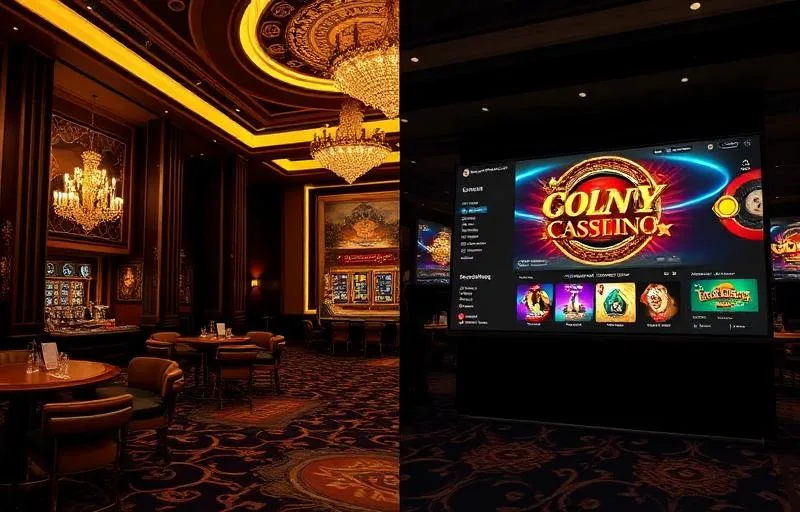
Land-Based vs Online Casinos: The Complete 2026 Comparison
How do traditional brick-and-mortar casinos stack up against modern online platforms in terms of experience, value, and convenience?
The debate between land-based and online casinos continues to evolve as both sectors innovate. In 2026, the gap between the two experiences is narrowing thanks to advances in live dealer technology, VR, and mobile gaming, though each format retains distinct advantages.
On revenue, the picture has fundamentally shifted. The global commercial gaming market is roughly $300 billion annually; online iGaming is now approximately $100 billion (one-third) versus $200 billion for land-based. A decade ago the ratio was closer to 10:90. Within a decade more, online could plausibly overtake land-based globally.
Online casinos offer unmatched convenience, game variety (often 2,000+ titles versus a few hundred at most physical casinos), and value through bonuses and promotions that have no land-based equivalent. Players can access their favorite games 24/7 from any location with internet access — a phone in your pocket has more casino games available than the Las Vegas Strip combined.
RTP comparison favors online substantially. A typical online slot publishes 96.5% RTP; the equivalent land-based slot in Las Vegas runs at 88–92% RTP depending on the casino. The lower-overhead online operating model passes through to better returns. Even with bonus wagering requirements applied, online edge is generally better than land-based on a like-for-like comparison.
Land-based casinos continue to offer a social atmosphere and sensory experience that online platforms cannot fully replicate. The ambiance, personal interaction, dining, entertainment, and the tactile experience of handling chips remain powerful draws for many players. The Las Vegas experience as a destination — not just gambling but shows, restaurants, nightlife — has no real online equivalent.
Live casino represents the bridge between the two worlds. Evolution Gaming's flagship studio in Riga produces over 1,000 hours of live casino content daily, with real dealers and the social interaction that draws people to physical casinos. The latency, video quality and interactive features have improved enough that the experience now genuinely rivals being at a table.
VR is a longer-term wildcard. If headsets become ubiquitous (a big if), VR casinos could potentially close the immersion gap further. PokerStars VR has demonstrated that the social and presence dimensions of casino play translate well to VR; whether the wider market adopts headsets remains to be seen.
Cost comparison favors online dramatically. A weekend trip to Las Vegas costs $1,000+ in hotels, flights, meals and tips before any actual gambling. Online play has zero overhead beyond the gaming itself — and the bonuses, cashback and loyalty rewards effectively reduce the cost of play below break-even for many casual players.
Many operators now pursue an omnichannel strategy, offering both online and physical casino experiences that complement each other. Loyalty programs that work across both channels encourage players to engage with the brand in whatever format suits their current preferences. Caesars Rewards and MGM Rewards are the leading omnichannel programs; European operators like Casino Cosmopol and Casino Holland Casino are smaller but similar.
The verdict isn't either-or — it's both. Convenience players will continue migrating to online; destination/entertainment players will continue valuing the land-based experience. The two markets serve different player needs and will likely coexist permanently with online taking the larger share globally.
Stay Updated with Wintino
Visit our news section daily for the latest iGaming industry updates.
Browse All News